Introduction: Unlock Your Personal Recovery Formula
Are you stuck in a cycle of pushing too hard and burning out, or holding back and missing gains? The fitness world is full of rigid recovery plans—"train five days, rest two"—but these generic formulas ignore a fundamental truth: your recovery capacity is as unique as your fingerprint. Stress, sleep, lifestyle, and your individual physiology create a constantly shifting landscape of readiness. How do you know when you are truly recovered and ready to perform at your peak and maximize athletic performance?
The answer lies in moving beyond guesswork and into the world of personalized data-driven recovery. By synthesizing three key streams of biometric feedback—Heart Rate Variability (HRV), sleep quality, and daily activity—you can decode your body's unique language. This article will guide you through combining this accessible data into a clear, actionable framework to discover your Personal Recovery Signature (PRS). This is your key to optimizing workout recovery, unlocking consistent progress, and finally escaping the frustration of plateaus and fatigue.

The Problem: Why Generic Recovery Plans and Advice Fail
One-size-fits-all recovery plans are destined to fail because they assume we all operate on the same biological clock. They ignore the profound impact of your job stress, your sleep quality last night, your digestion, or a looming deadline. Following a plan that says "today is a hard day" when your body is screaming for rest can lead to a cascade of negative outcomes: performance plateaus, chronic fatigue, increased injury risk, and systemic burnout. Conversely, taking an unneeded rest day when you're primed for a breakthrough session means leaving gains on the table.
At its core, the problem is a lack of personalized feedback. The critical question shifts from "What does the calendar say?" to "How do I know when I am truly recovered and ready to perform?" Without an objective way to answer this, you're left navigating by feel alone, which is often clouded by motivation, discipline, or simple denial. To train smarter and build a sustainable fitness routine, you need a system that listens to your body's signals in real time.
The Three Pillars of Your Personal Recovery Signature
Your Personal Recovery Signature (PRS) is built on three non-negotiable data streams. Think of them as a three-legged stool; if one is unstable, the whole structure wobbles. Together, they provide a holistic picture of your stress-recovery balance and physiological readiness.
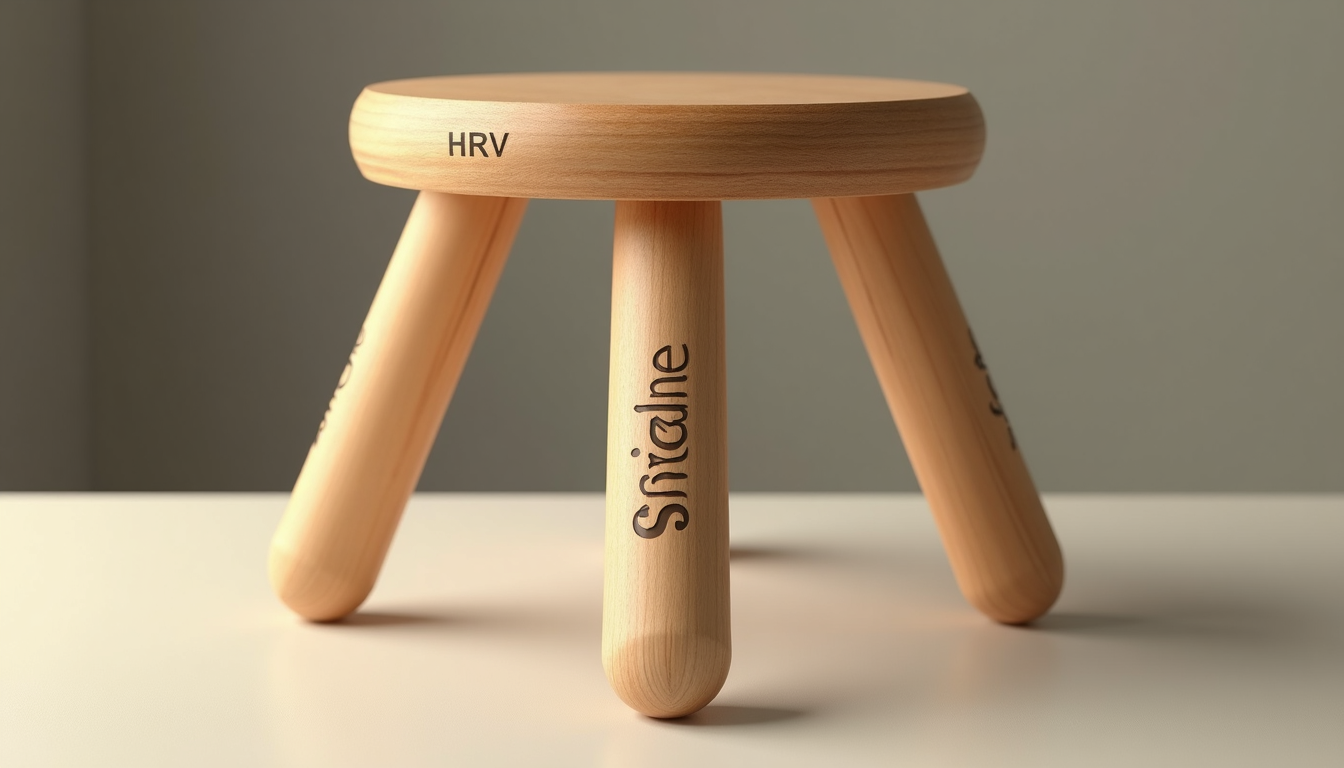
1. Heart Rate Variability (HRV): Your Nervous System's Key Messenger
HRV is not your heart rate. It's the subtle variation in time between each heartbeat, measured in milliseconds. It's a direct window into your autonomic nervous system (ANS), which regulates your "fight-or-flight" (sympathetic) and "rest-and-digest" (parasympathetic) states. According to research, HRV is a widely recognized biomarker for autonomic nervous system (ANS) regulation with applications in monitoring athletic recovery and overall health. It's essentially a key index of brain–body integration and a powerful tool for HRV training insights. For a deeper exploration of how to use this metric, see our guide on how to Unlock Peak Performance and Stress Resilience with Heart Rate Variability.
A higher HRV generally indicates a resilient, recovered state where your body can easily adapt to stress. A lower HRV suggests your nervous system is under strain, potentially from training overload, poor sleep, or life stress.
Tracking HRV Accurately for Reliable Data
For reliable trends, consistency is everything. Research shows HRV measurements are highly reliable, provided a rigorous methodology is employed. Measure first thing in the morning, before coffee, food, or significant movement, and do it in a consistent position (supine is ideal as it minimizes gravitational stress). Short-term (≤5 minute) recordings are a practical and valuable tool for non-clinical athletic monitoring and establishing your personal baseline.
— Nature Scientific Reports study
2. Sleep Quality: The Non-Negotiable Foundation of Physical Repair
Sleep is your body's ultimate recovery tool, but duration is just the entry ticket. Quality and architecture are paramount for sleep optimization. Modern wearables track stages like deep sleep (physical repair) and REM sleep (cognitive recovery). Key metrics to watch include sleep consistency (going to bed/waking at similar times), deep/REM sleep percentages, and restlessness. To understand how to use this data for better regeneration, you can learn more about how to Biohack Sleep Architecture: Data for Mind-Body Regeneration.
Poor sleep sabotages every other recovery effort. It impairs hormone regulation, slows muscle repair, weakens immune function, and directly impacts your next day's HRV. A great training day followed by a terrible night of sleep often means a "rest" day is needed, regardless of what your workout schedule says, highlighting the critical link between sleep and recovery.

3. Activity & Strain: Measuring the Training "Input"
This pillar quantifies the stress you apply. It includes your formal workouts and your overall daily load—your total training load. Key concepts here are Acute Training Load (your recent fatigue from the last ~7 days) and Chronic Training Load (your longer-term fitness level from the last ~28 days). The balance between them indicates if you're in a productive, sustainable, or risky zone, a concept often explored in studies on athletic performance monitoring.
Crucially, don't ignore the qualitative layer: Perceived Exertion and Muscle Soreness. A workout that feels much harder than usual for the same power output is a critical data point that your quantitative data might not yet show, guiding your daily readiness assessment.
Synthesizing the Data: From Numbers to Your Personal Recovery Signature
Data is useless without interpretation. The power comes from a simple, daily synthesis—a 3-Pillar Check-In. Each morning, ask:
- HRV Trend: Is my HRV at/near my personal baseline, trending up, or trending down?
- Sleep Quality: Did I get sufficient, high-quality sleep last night?
- Strain & Soreness: What was yesterday's load, and how do my muscles feel today?
Based on this check-in, you can define actionable recovery zones:
- Green Zone (Go): HRV at/near baseline, good sleep, low fatigue. Prescription: Execute your planned intense or high-volume session.
- Yellow Zone (Caution): 1-2 pillars are off. For example, HRV is okay but sleep was poor, or you're unusually sore. Prescription: Dial it back. Opt for a moderate session, technique-focused work, or active recovery (light cardio, mobility).
- Red Zone (Rest): 2+ pillars are significantly off. Low HRV, terrible sleep, and high fatigue. Prescription: Dedicated rest. This means a complete day off, gentle walking, or focused mobility/stretching. Forcing a workout here is counterproductive and risky.
This approach leads to Flexible Periodization: letting your daily readiness guide your weekly plan, rather than being a slave to a pre-written calendar. Your plan becomes adaptive, respecting your body's actual state for optimal performance.

Mapping Your Ideal Workout-to-Rest Ratios and Patterns
With your zones defined, you can now map your unique patterns over time to find your ideal workout-to-rest ratios. Follow this four-step process:
Establish a 4-Week Baseline
For one month, diligently track your three pillars without making major changes to your training. The goal is to collect honest data on how your body *actually* responds to your current life and training to establish your personal baseline.
Identify Your Personal Recovery Patterns
After a month, look for trends. Do you consistently need a yellow/caution day after two green/hard days? Does a poor night's sleep tank your HRV for two days? Does work travel create a predictable "red zone" period?
Create Your Personal Recovery Framework
Translate patterns into a personal rule set. For example: "My ideal rhythm is 2 quality training days, followed by 1 active recovery day. I need 1 full rest day after a high-stress work week or social event. Travel requires 2 easy days upon return."
Test and Refine Your Formula
Apply your framework for 2-3 training cycles. Are you making better progress with fewer setbacks? Do you feel more energized? Adjust the ratios based on your performance and feeling to continuously optimize.
Key Benefit: Sustainable Fitness
This data-driven approach moves you from boom-and-bust cycles to sustainable, consistent progress. By aligning your training with your body's signals, you reduce injury risk, prevent burnout, and ensure you're always training at your true capacity—not under or over it.
Advanced Applications & Important Cautions
As you become fluent in your data, you'll encounter nuanced scenarios. Life stress is training stress. A tough emotional conversation or a tight work deadline activates the same physiological stress pathways as a hard workout. Your personalized recovery framework must account for this—sometimes a "rest day" means a mental health day.
You must also learn to listen to discrepancies. What if it's race day and your data says "red"? Data is a guide, not a god. Acute pre-race nerves can lower HRV, but your fitness is still there. Use the data to inform your strategy (start conservatively), not to dictate your participation.
A Critical Limitation: Data Context is Key
The research is clear: HRV data is only useful if collected under standardized, controlled conditions; its value is entirely dependent on consistent measurement practices. Obsessing over a single day's number is pointless. Focus on trends over time, and never let the data override profound intuitive wisdom. If you feel ill, rest—even if your HRV looks good. Avoid analysis paralysis by keeping your morning check-in simple and focused on the three pillars.
— Nature Scientific Reports study
Conclusion: Become the Expert on Your Own Body
Discovering your Personal Recovery Signature (PRS) is a journey of self-knowledge that transforms your approach to fitness. It liberates you from the tyranny of generic plans and empowers you to become the expert on your own body. By systematically using HRV, sleep, and activity data, you replace guesswork with guided insight, leading to more sustainable progress, fewer injuries, and a deeper connection to your physical well-being. This is the core of our mission at our health tracking platform.
Start Discovering Your Personal Recovery Signature Today
Your call to action is simple:
Short-term: Pick one new metric—perhaps morning HRV or sleep consistency—and start tracking it this week.
Long-term: Commit to a 4-week baseline period of non-judgmental data collection. Look for your patterns, define your zones, and start crafting the **personalized training schedule** that is uniquely, perfectly yours. Ready to begin? **Register for your account** and start synthesizing your data into actionable insight.